


My last two articles used societal levels to explain why Afghanistan failed as a republic. Today’s article applies this same approach to examine the actions of its president in the final days.
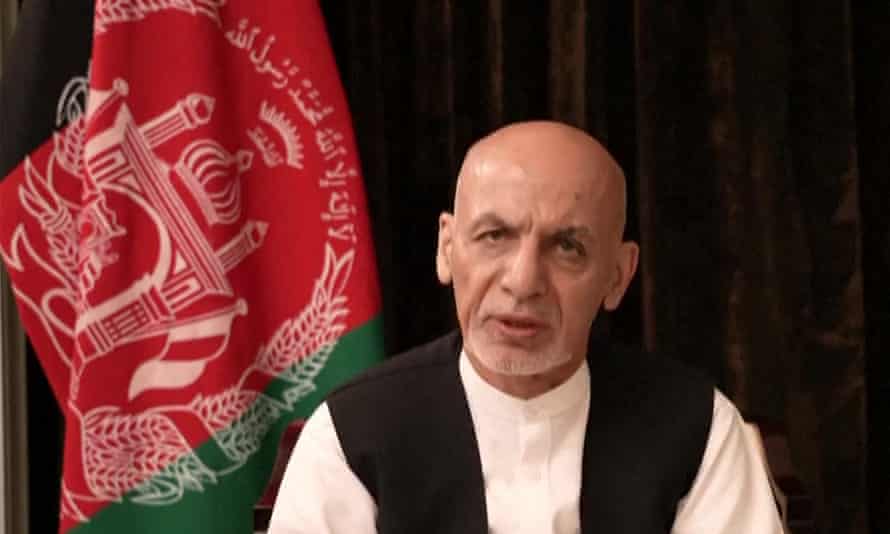
Ashraf Ghani was the president of Afghanistan. The day before Afghanistan fell, an aid falsely told Ghani that the Taliban were in the palace. That afternoon, Ghani boarded a helicopter with his wife and a couple of aids and headed for Uzbekistan. Later, they would take a small plane to the United Arab Emirates. Neither of his two vice presidents nor any other senior officials knew he had left. Even after Ghani reached safety, he never telephoned those officials, who were scrambling to find him and coordinate actions. Once word got out, other Afghan senior officials headed for the airport. Later he said that he wanted to spare his country “a flood of bloodshed.”
Nation-states are built-up over lifetimes of commitment, with shared values and mutual sacrifice at their core. Sustaining them requires a group mentality: self-centeredness at high levels works to unravel governance. This is different from a fiefdom, where everything revolves around the king. Those seeking influence maneuver around the king. Self-centeredness is actually more tolerable. Ghani was acting with a fiefdom mentality when he unilaterally decided to leave the country.
The impact of his decision was soon apparent. The peace deal the US-brokered with the Taliban the year before called for a transitional government to be set-up. Under pressure from US Secretary of State, Anthony Blinken, Ghani agreed to a truce, where he would step aside and the Taliban would let the interim government take-over. Ghani’s sudden departure scuttled the plan. When word got out the president was gone, government employees melted away and government institutions collapsed. A power vacuum ensued. In the end, the US made an arrangement with the Taliban: the US would control the airport and the Taliban would control the city. In a twist of fate, the Taliban entered the city to preserve order. Clearly Ghani wasn’t ready to be president of a republic.
Source:
Susannah George et al, “Fateful Choices: the Day the US Lost Its Longest War in Kabul, Washington Post, 29 Aug 2021, A1; see also https://www.washingtonpost.com/national-security/us-afghanistan-longest-war-ends/2021/08/30/b56153ea-09b8-11ec-9781-07796ffb56fe_story.html
Photo: Getty Images