


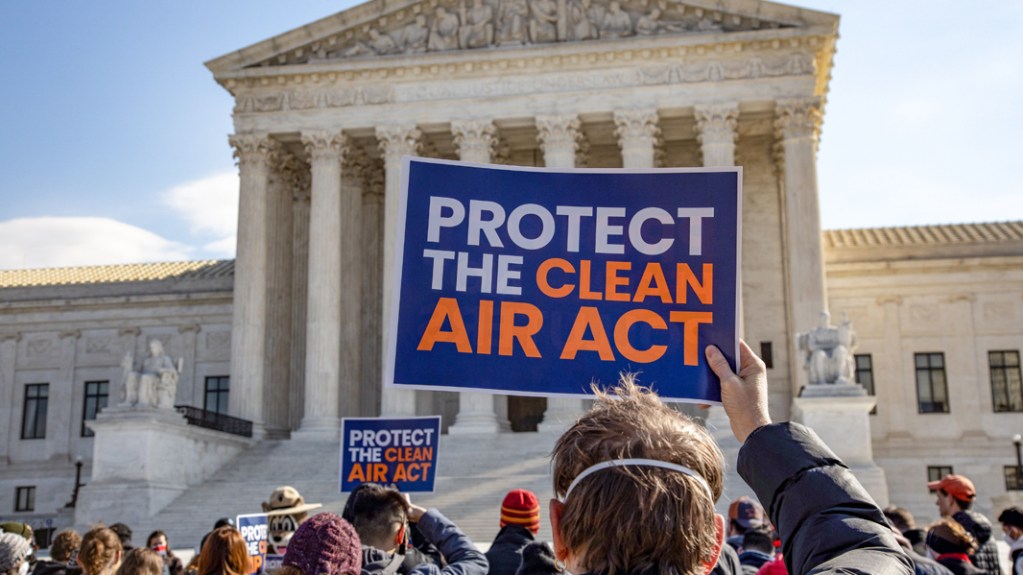
Last month, the recent Supreme Court ruled that the EPA could not regulate greenhouse emissions from power plants. Whether one believes this ruling restrains an overreaching agency or hinders saving the planet, it illustrates a limitation in our governance.
In a 6-3 decision, the Supreme Court determined that the EPA does not have the specific authority to regulate carbon emissions. Justice Roberts wrote: “Capping carbon dioxide emissions at a level that will force a nationwide transition away from the use of coals to generate electricity may be a sensible solution to ‘the crisis of the day’ …but a decision of such magnitude and consequences rests with Congress itself, or an agency acting pursuant to a clear delegation from that representative body.” Justice Kagan suggested EPA does have implied authority when she countered: “Congress knows what it doesn’t and can’t know when it drafts a statute; and Congress therefore gives an expert agency the power to address issues…as and when they arise.” The Biden Administration believes this decision “risks damaging our nation’s ability to keep our air clean”: it has a goal to cut greenhouse gas emissions in half by 2030 and altogether by 2035.
This ruling illustrates an inherent limitation in our form of government. The judicial branch insists that the legislative branch has to make the decision. The legislative branch has difficulty making any decision. The executive branch made the decision and was taking action, but was blocked by the judicial branch. And the long-term fate of the world potentially hangs on the issue. In World Leadership, I identified the need for new technologies and practices to make governance nimble enough to keep pace with an ever-quickening society. However, until those arrive, we must make do with what we have.
Whether the ruling truly impacts climate change is unclear. Some experts say that economics is already driving the transition from fossil fuel to alternative sources. Others believe this could really damage America’s ability to address climate change. Regardless, it shows that our government strains to deal with complex issues. In this case, the default is (as Justice Kagan wrote): “The Court appoints itself—instead of Congress or the expert agency—the decisionmaker on climate policy. I cannot think of many things more frightening.”
Source:
Mark Sherman, “Supreme Court Limits EPA in Curbing Power Plant Emissions,” Associated Press, 30 June 2022; accessed from https://apnews.com/article/supreme-court-epa-ruling-2e893673819a1b6c6aa272a5e814f0b0
Adam Liptak, “Supreme Court Limits EPA’s Ability to Restrict Power Plant Emissions,” New York Times, 30 June 2022; accessed from https://www.nytimes.com/2022/06/30/us/epa-carbon-emissions-scotus.html
All Things Considered, “What the Supreme Court’s EPA Ruling Will Mean for the Agency’s Goals,” National Public Radio, 2 July 2022.
Photo: Bryan Olin Dozier/NurPhoto/Shutterstock