


After decades of waiting, King Charles III was crowned in Westminster Abbey earlier this week. At the age of 74, the longest king-in-waiting was adorned with the British crown, sat on the ancient throne, and held the royal scepter. A few, however, wondered whether the pomp was worth it.
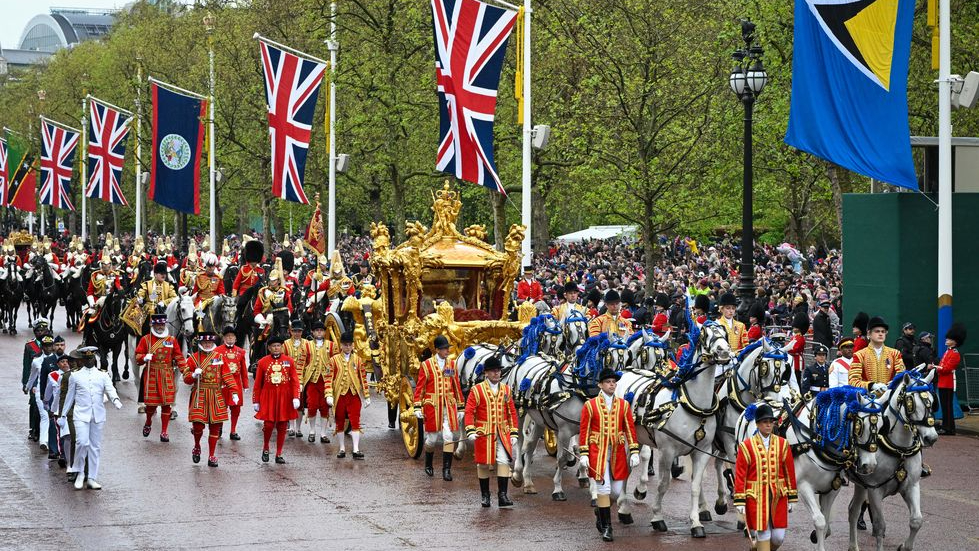
It was a coronation beset with ancient tradition yet updated with touches of modernity to reflect modern British society. Afterward, thousands lined the streets between the Abbey and Buckingham Palace to watch the longest military procession in 70 years. It was the first coronation broadcast in color, so the golden carriage shined for the world to see. However, a few miles away, over a thousand protestors chanted against the monarchy’s existence. The protestors would prefer an elected official as head-of-state—someone free to engage in day-to-day politicking. (By constitution, the monarch has to act apolitically, and by convention, the monarch does not vote. While the monarch appoints prime ministers, invariably the person was proffered by a party.) While counter-protestors were also present, a recent poll indicated that 64% of Britons said they cared “not very much” or “not at all” when asked about the coronation. Youths are apathetic to the crown in general.
Democracies exist because people believe they work—that includes constitutional monarchies. Charles’s coronation matters because people believe it matters. Those who would replace the monarch with an elected official need to ask: What would be gained? The head of state needs to have the backing of the people to do the job effectively and the monarchy has a thousand years of branding to back it up—far more than a politician elected every few years would have.
While some complained that the coronation cost too much at a time when Britain is seeing severe inflation, others countered that the tourism generated by the royal family more than offsets its cost. In either case, having a royal check on the political system—one steeped in tradition that people believe in—can be one of the most stabilizing forces a democracy can have.
Source:
William Booth, Karla Adam, “King Charles’s Crowning Moment,” Washington Post, 7 May 2023, A1; see also, https://www.washingtonpost.com/world/2023/05/06/coronation-highlights-king-charles/
Annabelle Timsit,” As King Charles III is Crowned, Some Subjects Declare He is “Not My King,” Washington Post, 7 May, 2023, A20.
Photo: Getty Images