


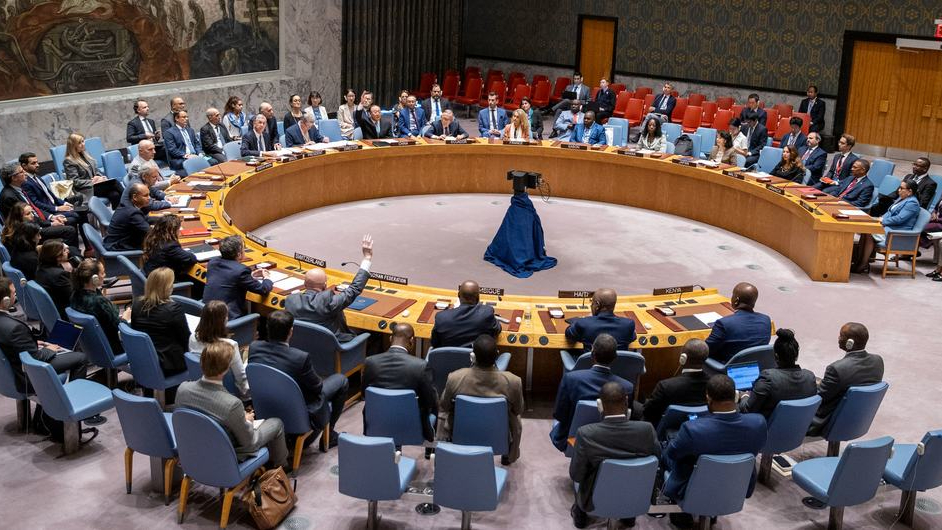
This week, the United Nations Security Council approved sending a multinational force to Haiti to contend with gang violence. The 15-member body voted 13-0-2 to approve Kenya’s offer to lead the intervention. This vote begins a new, lengthy, and nebulous chapter in Haiti’s history.
Gang violence has racked Haiti in recent years. Roughly 3,000 people have been killed this year alone and another 200,000 have been displaced. On top of this, the most powerful gang leader recently announced plans to overthrow the government. Haiti’s prime minister requested international assistance, but countries were reluctant to get involved. Finally, Kenya offered to send 1,000 police officers. When no other country stepped in to lead the effort, Kenya acquiesced to that as well. Additional troops will come from Jamaica, Antigua, Barbuda, and the Bahamas. The deployment has been authorized for one year and will be reviewed after nine months by the Security Council.
The outcome of this intervention is predictable. The international community has once again authorized an insertion without an exit strategy, a tearing down without a plan to build back up. It is the same mistake made in both Libya and Iraq. Security forces cannot restore the government because there is nothing to restore: the Haitian government is in turmoil with no elected official still in office. Holding elections will be useless because Haiti does not have the underlying requisites to sustain a democracy. Furthermore, there is no endgame. If Kenya pulls-out at the end of a year, the Darwinian process of secreting a new ruler will resume, with lots of bloodshed. Alternatively, Kenya can stay until a democracy forms, which will take a generation, making Haiti Kenya’s de facto colony. There is not even assurance the mission will succeed—one thousand police officers are understrength to take on the gangs.
As regrettable as it might sound, working with the natural process of allowing a ruler to emerge from the gangs may be the most resilient path forward. If the international community wants to get involved, it needs to shape this process and find ways to encourage the new ruler to observe human rights. Otherwise, many will die with no sustainable change in the outcome.
Source:
“UN Approves International Force to Aid Haiti Amid Gang Violence,” Aljazeera, 2 October 2023; accessed from https://www.aljazeera.com/podcasts/2023/10/4/can-foreign-intervention-save-haiti-from-gang-violence
Nimi Princewill, Stephanie Busari, Manveena Suri, Jessie Gretener, “Kenya Police to Take on Haiti Criminal Gangs Amid Criticism of their Human Rights Record,” CNN, 3 October 2023; accessed from https://www.cnn.com/2023/10/03/africa/kenya-multinational-force-haiti-intl/index.html
Widlore Merancourt, Amanda Coletta, “Haiti Wants Foreign Help Against its Gangs. The Details Worry All Sides,” Washington Post, 24 September 2023, A22; see also https://www.washingtonpost.com/world/2023/09/20/haiti-kenya-security-council-intervention
Photo: Paul Filguerias, UN