


On Wednesday, President Biden gave an early farewell speech, in which he said he is not running for president again because our democracy is at risk, and he needs to pass the torch to a younger candidate to preserve it. This begs the question: Is our democracy really at risk?
A few recent events highlight the issue.
- Project 2025. The Heritage Foundation developed a blueprint for consolidating power under Donald Trump once he assumes office. It realigns authority currently distributed around the government and gives it to the president. It has the potential to threaten our separation of powers.
- The Big Lie. The falsehood that Trump won the last presidential election is believed by too many people, despite evidence to the contrary. This narrative introduces doubt in people’s minds over whether our system works, weakening our government.
- The Capitol Riot. That a leader who fomented an attempted coup against our government is not serving time but rather is a presidential candidate reveals that democracy is not a high a priority for many people. In addition, if the rioters are pardoned, then violence becomes an acceptable element of governance.
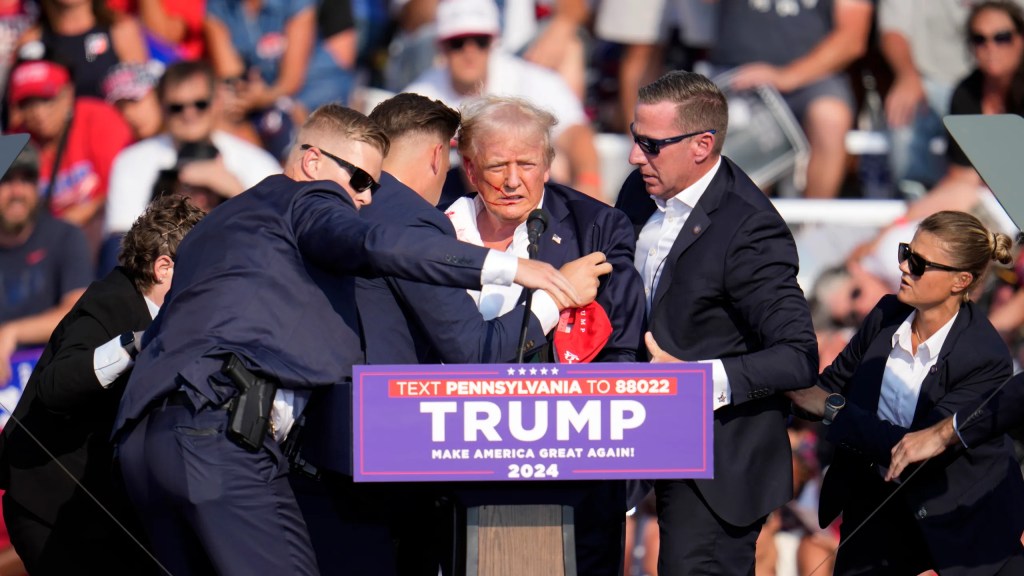
- Assassination attempt on Trump. Last week’s attempt on Trump’s life also is a clear disruption of democracy since it replaces choice with violence. It harkens back to the days when whoever had the guns made the rules.
These events occurred because of environmental changes over the last two decades, principally:
- Greater skepticism. Mistrust in government has become so bad that much of the population doesn’t care when it’s being lied to (witness the presidential debate). This indifference makes a government based on adjudication less effective.
- Greater division. The growing reluctance to compromise means a growing uselessness of the legislative apparatus. The intent was to make laws through dialog, debate, and discussion, rather than waiting for an election to flip Congress and rewriting them from a singular point of view.
- Greater violence. Since 2016, hostile rhetoric has ramped up, which eventually ramps up violence. When a leader on one side uses such language, it is only a matter of time until the other side starts using it. Then issues are settled with hostility and violence rather than discussion.
None of these behaviors are new; in fact, they represent the past. There was a time when violence was a norm, necessitated a king to keep order. Democracy was intended to move beyond this. Hence, actions that increase skepticism, division, and violence do not shift us right or left—they shift us backward, away from democracy.
Photo: Gene J. Puskar, AP Photo