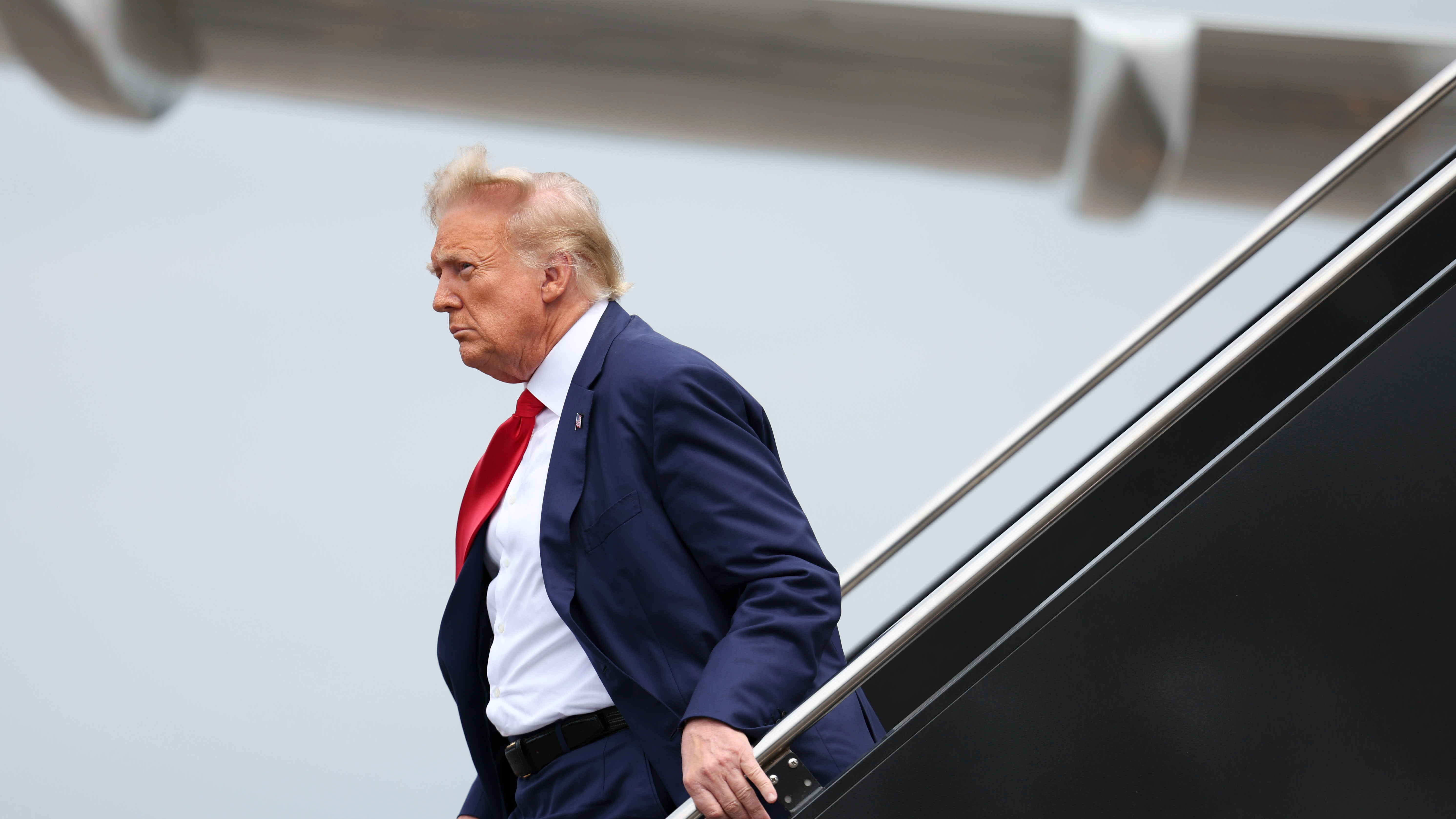
On Thursday, former president, Donald Trump, the current Republican front-runner for the 2024 presidential election, was arraigned on four counts related to his purported attempts to change the results of the 2020 presidential election.
The former president pleaded not guilty to four criminal charges, including “conspiracy to defraud the US government.” The indictment also mentioned that he urged state election officials to undo voting results, he had a plan to use fake electors to vote for him instead of Biden, he claimed that 10,000 dead people voted for Biden in Georgia, and he pressured then-Vice-president Mike Pence halt electoral results certification. The indictment also said the January 6 riot was “fueled by lies, lies by the defendant targeted at obstructing a bedrock function of the US government.” Special counsel, Jack Smith, brought the charges before a grand jury, which agreed that there was enough evidence to warrant a trial. Trump, released pending trial, framed it as the “persecution of a political opponent.” His campaign called the charges fake and asked why it took two-and-a-half years to bring them forward.
Trump is the first president to refuse the voluntary transfer of power following the loss of an election. In World Leadership, I define deviance as one of the four inherent limitations of rule-of-law governments. Deviance occurs when people with decision-making authority pursue their own interests at the expense of the society they serve. Among other things, Trump showed that he did not take his oath to protect the Constitution seriously, and he painted a government institution, the Justice Department, as a corrupt tool of the current administration. A failure to prosecute him now would undermine democracy itself—portraying it as weak and ineffective, which has occurred in some countries.
Interestingly, this historical episode exposes a gap in American democracy. A conviction would not necessarily bar him from running for, or even serving as, president. In theory, he could even win office and then appoint an Attorney General who would dismiss the charges against him. It really only takes the right person to expose the weak points in a system of government.
Sources:
Aditi Sangal, Matt Meyer, Maureen Chowdhury, Elise Hammond, Tori B Powell, “Trump Pleads Not Guilty on 2020 Election Interference Charges,” CNN, 3 August 2023; see also https://www.cnn.com/2023/08/03/politics/arraignment-trump-election-interference-indictment/index.html
Eric Tucker, Michael Kunzelman, “Trump Indicted for Efforts to Overturn 2020 Election and Block Transfer of Power,” Associated Press, 2 August 2023; see also https://apnews.com/article/trump-indicted-jan-6-investigation-special-counsel
Josh Gerstein, Kyle Chenley, “Key Revelations, Groundbreaking Strategies and Notable Omissions in the New Trump Indictment,” Politico, 1 August 2023; accessed from https://www.politico.com/news/2023/08/01/trump-indictment-takeaways
Stephen Collinson, “Why Trump’s Latest Indictment will Reverberate for Years to Come,” CNN, 3 August 2023; accessed from https://www.cnn.com/2023/08/02/politics/trump-latest-indictment-consequences/index.html
Photo: Tom Brenner, The Washington Post, Getty Images
No responses yet