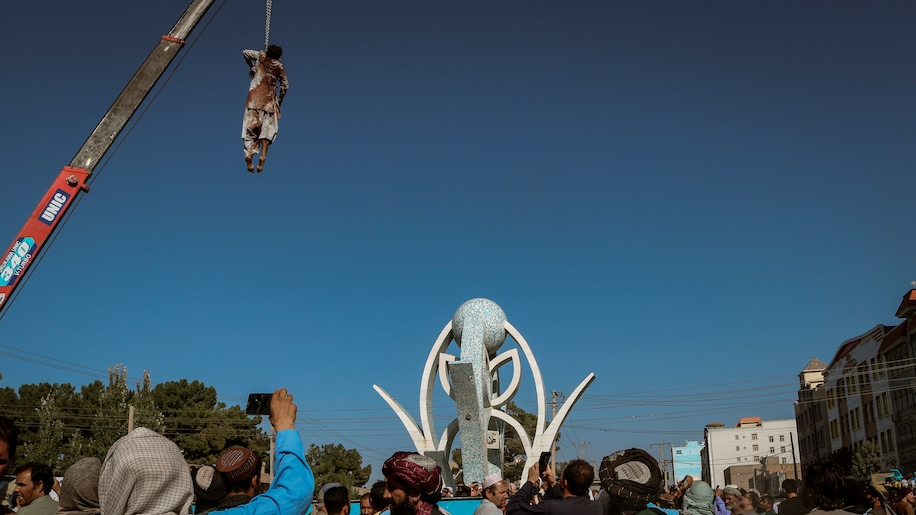
In Herat, Afghanistan, the bodies of four accused kidnappers swung from construction cranes in the city’s central plaza for three days. The message was clear: There’s a new sheriff in town, or rather, an old sheriff has returned.
Many were horrified by the grotesque reminder of the dark days of Taliban justice. Others, however, felt relieved—finally, someone is doing something to stop the crime. Kidnappings and armed robbery had become a chronic problem in this city of 600,000. Child abductions were so common that many parents stopped letting their children walk to the street corner. But the message worked: crime in the city has largely stopped.
This form of justice works well at a chiefdom-fiefdom level of society, where local authorities are directed to solve a problem by a higher authority and given the flexibility to do it. There is little concern for citizen’s rights, and often no contemplation of due process. Yet, it works. In this case, the Taliban also scored a political coup. They needed to demonstrate their value to the people, particularly in a remote region such as the one in which Herat lies. Solving the crime problem was a major win for them.
Of course, there is a price to pay for this service—and it is largely being paid by women. Some have been fired from their jobs, others have been told they cannot compete in certain sports, and all are forbidden to wear lipstick and high heels. Yet, crime has largely disappeared. “It used to be dangerous to go from my village to the city because of robbers,” said one 68-year-old legal scribe. “Now, since they hanged up those criminals, I have no worries.” The dichotomy is familiar: the benefits of justice at the cost of freedom, unequally born by different groups within a society. It is a complex situation, and one that needs to continue to evolve.
Source:
Pamela Constable, “Harsh Justice, Growing Despair,” Washington Post , 10 October 2021, A20; also https://www.washingtonpost.com/world/asia_pacific/taliban-herat-afghanistan/2021/10/06/da8a40b0-2604-11ec-8739-5cb6aba30a30_story.html
Photo: Associated Press
No responses yet