Remember the last time the power went out on a cold winter night or a hot summer day? Freezing in bed or overheating at mid-afternoon can feel like an enhanced interrogation technique. Depending on where you live, however, you are most likely to experience a brown-out at these times—a time when electricity demand exceeds supply. Now imagine living in a world with only renewable energy—where electricity stops when the wind stops or the sun sets. Without fossil fuel, a 24/7 resource, you’re exposed to brown-outs regularly. Fortunately, smart people are trying to prevent this scenario from happening.
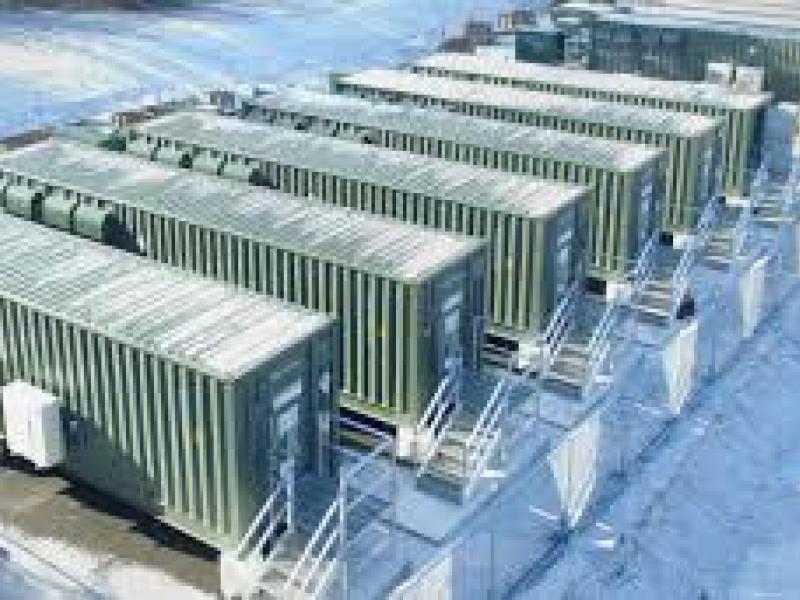
In August 2019, the Department of Energy announced its decision to build an electric-grid research center at the Pacific Northwest National Laboratory (PNNL) in Richland, Washington. The PNNL has over 400 scientists, engineers, and professional staff working on energy-related problems with an annual budget of over a $1 billion. Energy storage has become one of their major research programs. Right now, most energy storage is accomplished by pumping water into a reservoir when excess electricity is available, then producing electricity using turbine-generators when the water flows-out. However, there aren’t enough of these sites to support a renewable energy economy. An alternative is to use batteries. About 1% of energy storage today uses batteries—ones large enough to store electricity for an entire grid–but it is expensive. Research is focused on improving these.
Lithium-ion batteries are the state-of-the-art, but they are best suited for small electronic devices and gadgets. They also have the infamous overheating problem. Vanadium-flow batteries are in development and have a significant cost advantage for large-scale applications; i.e., grid-level storage. Aluminum batteries are also being researched, mostly in Europe.
For an economy to shift from fossil fuel to renewable energy, effective energy storage is needed. Until this issue is resolved, it is unlikely such a change can occur. And the pace has to pick-up: it took 40 years to develop lithium-ion batteries; most experts agree we need the next generation in ten.
Reference:
James Conca, “Energy’s Future—Battery and Storage Technologies,” Forbes, 26 Aug 2019; retrieved from https://www.forbes.com/sites/jamesconca/2019/08/26/energys-future-battery-and-storage-technologies/#1d4f6dbb44cf
“A new concept could make more environmentally friendly batteries possible,” Science Daily, 30 Sep 2019; retrieved from https://www.sciencedaily.com/releases/2019/09/190930082249.htm
Lynne Roeder, “Optimize, not Oversize,” PNNL, 30 Aug 219, retrieved from https://www.pnnl.gov/news-media/optimize-not-oversize
No responses yet