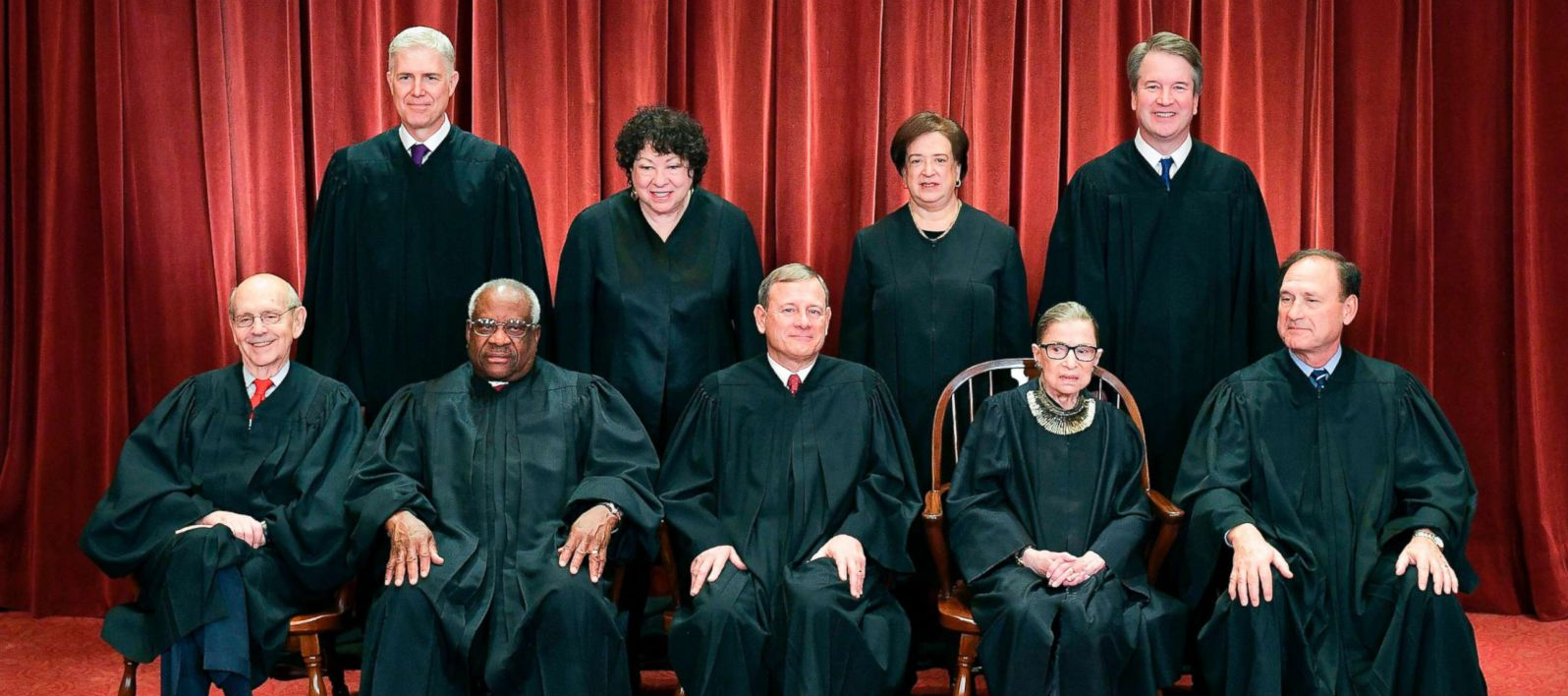
A recent poll shows that public opinion of the US Supreme Court has reached historic lows. Its recent decision to overturn Roe v. Wade has eroded the perception of the Court in many people’s eyes. Chief Justice John Roberts pushed back: “Simply because people disagree with an opinion is not a basis for criticizing the legitimacy of the court.” However, this misses the point—for many, it isn’t the decision but rather how the decision was made.
In overturning Roe v. Wade, the Court removed the constitutional protection to abortion. The interesting fact is that it didn’t need to go that far. Chief Justice Roberts argued that Dobbs v. Jackson Women’s Health Organization could be resolved simply by overturning the viability clause, which sets the time limit for an abortion at roughly 22 weeks, when the fetus can live outside the mother’s womb. However, the other conservative justices chose to go all the way (over Roberts’s dissent) and remove the constitutional protection, and in the process overturn nearly fifty years of precedence.
Stare decisis is Latin for “stand by things decided.” Stare decisis emerged at the beginning of the print revolution when the legal field correspondingly revolutionized. The principle limited arbitrary and capricious rulings by judges and magistrates. It added stability to legal code and the entire judiciary. It also led to the establishment of rule-of-law as a basis for governance and would help power shift from kings and autocrats to elected officials and legislatures. In overturning Roe v. Wade, the court showed surprisingly little regard for this tool for government stability.
Historically, overturning an established precedent was done only in light of new overwhelming evidence. When Brown v. Board of Education overturned Plessy v. Ferguson, it was because overwhelming evidence showed that separate can never be equal. In Dobbs, while new evidence could challenge the viability clause, there was no real new evidence to overturn the constitutional protection—only Court composition changed. As such, the justices became nine legislators—in addition to the 535 already in Congress. That is, at least partially, why the Court’s popularity is so low.
Source:
Dana Milbank, “Et tu, Alito? The High Court has Murdered Stare Decisis,” Washington Post, 3 July 2022, A21; see also https://www.washingtonpost.com/opinions/2022/07/01/supreme-court-stare-decisis-precedent-dead/
Robert Barnes, “Supreme Court Set to Resume as its Approval Takes a Beating,” Washington Post, 2 October 2022, A1; see also https://www.washingtonpost.com/politics/2022/09/29/supreme-court-roberts-kagan-legitimacy/
Photo: Mandel Ngan/AFP/Getty Images
No responses yet