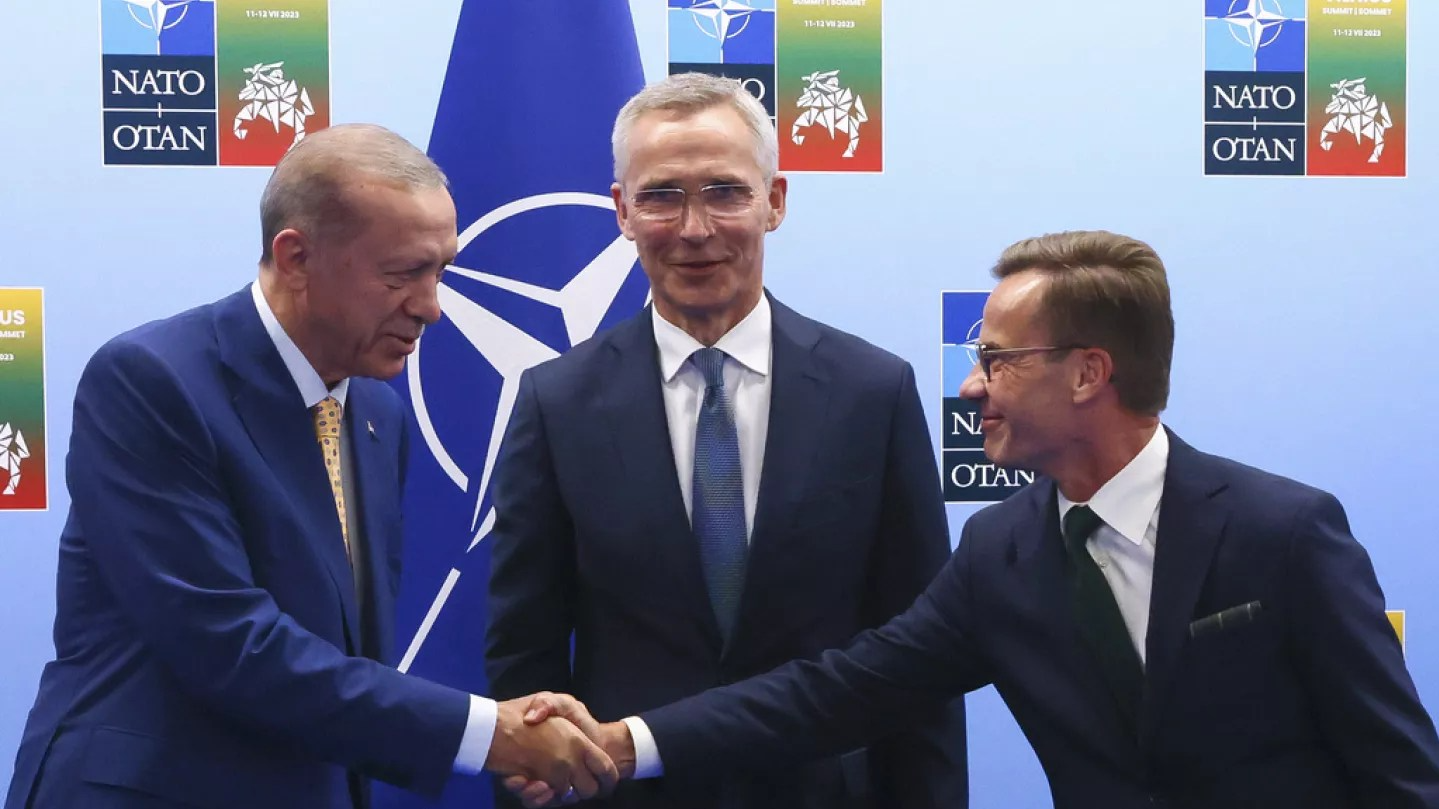
NATO voted this week to admit Sweden into its ranks. Finland was admitted in April. NATO now numbers thirty-two countries, and these recent admissions provide a lesson for how future nation-unions will form.
In April, Finland emerged from decades of isolation to join NATO. The Finnish president claimed that NATO membership would “strengthen our position and room for maneuver.” Finland’s accession lengthens NATO’s border with Russia from 755 miles to 1585 miles—a major operational improvement. At this week’s NATO Summit, Turkey dropped its opposition to Sweden’s membership, opening its path for inclusion. Turkey had accused Sweden of harboring terrorists but relented when Sweden agreed to expand its counter-terrorism operation. Both countries’ desire to join NATO was triggered by Russia’s invasion of Ukraine. Former Finnish Prime Minister Sanna Marin spoke on how this happened: “Everything changed when Russia invaded Ukraine. People’s mindset in Finland, also in Sweden, changed and shifted very dramatically.” Foot-stomping the achievement, the NATO Secretary General said: “Today, we show the world that [Putin] has failed, that aggression and intimidation do not work.”
The borders of the future are being drawn today. While they haven’t solidified, they are being outlined. Putin’s Cold War mentality called for an armed invasion to expand Russia’s border. However, borders in the future will be shaped by mutually shared interests. Both Finland and Sweden have mutual security interests with NATO. Future unions will be initiated primarily for economic attractiveness, and secondarily for security and other concerns. Unions formed by coercion, threats, and invasion will not last—the Soviet Union did not last.
Arguably, Putin may have found it a tall order to make Russia economically attractive—a country run by billionaire oligarchs who siphon wealth from the Russian economy at the expense of every other Russian only has so much appeal. Meanwhile, for dropping its opposition to Sweden, Turkey is signaling it wants its EU application reconsidered. (Turkey applied to EU in 1987, but its drift toward authoritarianism halted progress.) EU officials were quick to comment that the two memberships are not linked, though Sweden at least is willing to support it.
Source:
“Turkey Backs Sweden’s NATO Membership,” BBC, 11 July 2023; accessed from https://www.bbc.com/news/world-europe-66160319
Tara John, “Finland Joins NATO, Doubling Military Alliance’s Border with Russia in a Blow for Putin,” CNN, 4 April 2023; accessed from https://www.cnn.com/2023/04/04/europe/finland-joins-nato-intl/index.html
Photo: Euronews
No responses yet