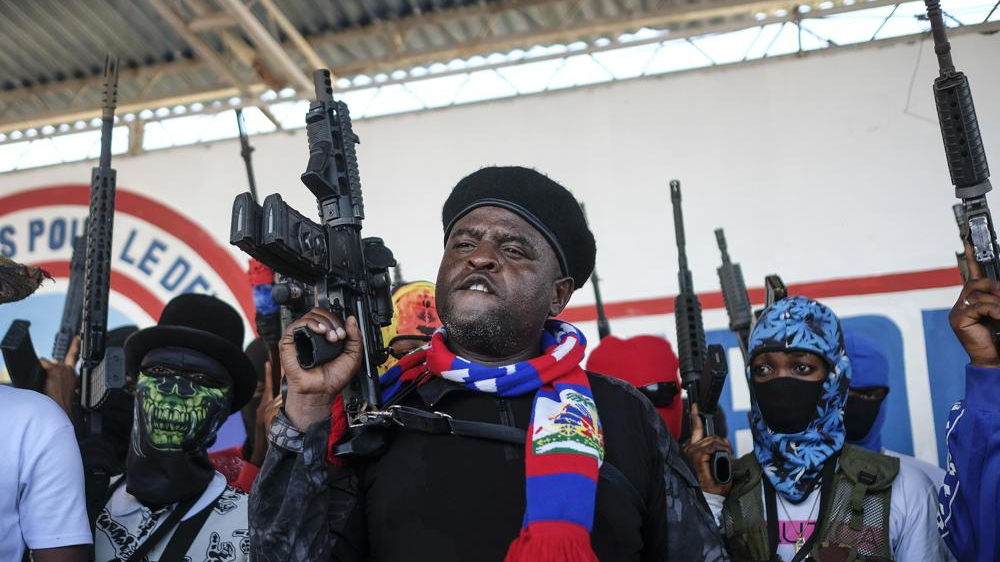
This week, the Department of State issued a travel advisory to Americans in Haiti telling them to leave the country “as soon as possible” because of spiraling security and infrastructure problems.
Since the Haitian president was assassinated two years ago, gangs have operated unencumbered. Now they control large parts of the country, including Port-au-Prince, where roughly 150 gangs battle for territory. Civilians are both collateral damage and the targets of kidnapping and rape. Over 2,400 people have been killed this year and another 950 kidnapped. Haiti’s 9,500-man police force is understaffed and ill equipped to handle the crisis. (The army was disbanded years ago because of its tendency to foster coups.) Many in the police force have ties to gangs, and in fact, the most influential gang leader is a former police officer. The Haitian government asked for foreign help against the gangs almost a year ago. Vigilante groups have been organizing to fight back, killing over 350 gang members since April. Meanwhile, the country continues to deteriorate: the UN says roughly half of Haiti’s 11 million people need humanitarian assistance.
Haiti is experiencing a fallback. This occurs when a society drops from a higher level of development to a lower one. (Europe at the end of the Roman Empire is another example.) Haiti has fallen from a nation-state to a chiefdom—a two-levels drop. The Haitian government lost control, so now governance comes from gangs. Over time, a society will return to its original level, but it may take decades (centuries in the ancient world). This has already begun in Haiti as gangs are beginning to coalesce. Two alliances have formed: the G-Pep Federation and the G9 Alliance. This indicates a shift toward a fiefdom (one level below nation-state). Unfortunately, the most likely scenario is that these two rival alliances will eventually fight it out for supremacy—causing a civil war.
Kenya offered to send 1,000 police to train Haitian police and help restore order; however, this offer is viewed warily by some human rights groups who note the Kenyan police record of human rights abuses. Nonetheless, the bigger issue is whether such a force can make a difference in a country without a government.
Sources:
Kim Hjelmgaard, “US Embassy Urges Americans to Leave Haiti ‘As Soon As Possible’,” USA Today, 31 August 2023; accessed from https://www.usatoday.com/story/news/world/2023/08/31/u-s-embassy-in-haiti-to-americans-leave-as-soon-as-possible/
Luke Taylor, “There’s No Police or State: Haitians Helpless as Violence and Brutality Soars,” Guardian, 14 August 2023; accessed from https://www.theguardian.com/world/2023/aug/14/haiti-violence-abuse-killing-human-rights-watch
“US Woman and Daughter Freed Nearly Two Weeks After Kidnapping in Haiti,” Guardian, 9 August 2023; accessed from https://www.theguardian.com/world/2023/aug/09/haiti-kidnapping-us-woman-daughter
“Haiti Violence: Gangs Gun Down Churchgoers Protesting Against Criminals,” Guardian, 26 August 2023; accessed from https://www.theguardian.com/world/2023/aug/27/haiti-violence-gang-opens-fire-on-church-led-group-protesting-against-criminals
Luke Taylor, “Kenya’s Offer to Send Police to Haiti Sparks Humans Rights Concerns,” Guardian, 5 August 2023; accessed from https://www.theguardian.com/world/2023/aug/05/kenya-police-haiti-human-rights-concerns
Photo: Matias Delacroix, AP
No responses yet