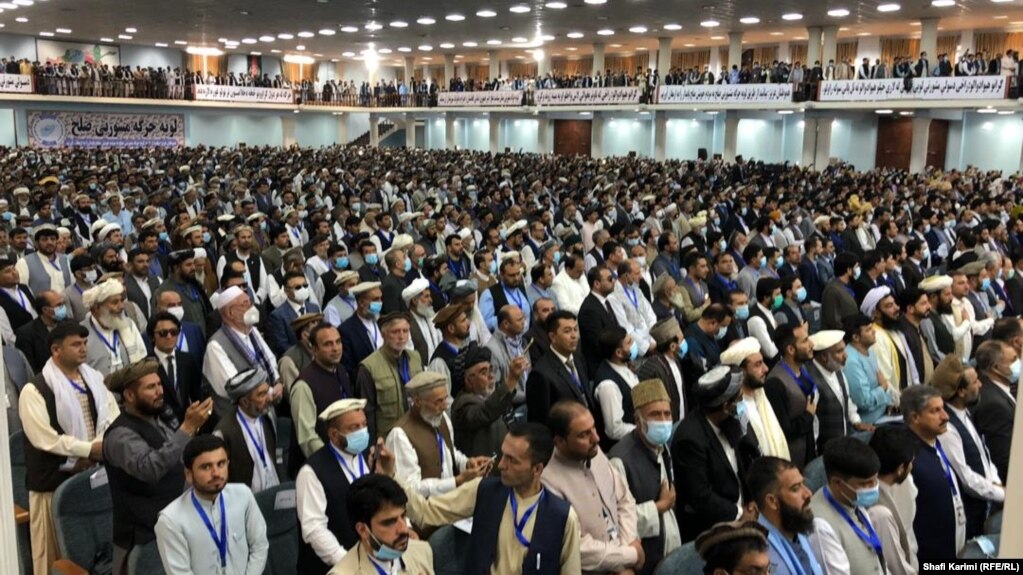
Last year, the Washington Post released the Afghanistan Papers. It concluded we failed in Afghanistan. But did we really fail? The Taliban was ousted, a new government was installed, and for twenty years that new government has survived. However, there is still a problem: we’re still there. For twenty years, we’ve been propping-up the government. This begs a second question: Why? To understand this, we need to look back.
In 2001, the Afghan loya jirga (grand assembly) chose to establish a republic as their new form of government. This decision was made out of a spirit of progress. However, neither the loya jirga nor its American advisors realized all of the prerequisites for sustaining a republic. Soon corruption abounded, elections were tainted, warlords grabbed territory, and the Taliban returned. A better move would have been to restore its monarchy (which they had until a coup in 1973). A respected sovereign would have had more power to control the countryside and its warlords. The value of centralized power can be seen in Afghanistan’s opium trade. In the late-1990s, the Taliban had declared it un-Islamic and shut-down the nation’s production by 90% in one year. After they were toppled, opium production resumed. By 2018, after the US’s much-publicized war on opium, production was four-times higher than it was in 2002.
So why is a monarchy a better fit for Afghanistan? Because there is a natural progression of societies, and Afghanistan lies somewhere between a chiefdom and a fiefdom. As such, the next stable structure would have been a complete fiefdom—a modern monarchy, like Morocco. Over time, the government could have migrated toward a constitutional monarchy, like Great Britain. The 2001 decision led to a long-term commitment by the US and its NATO allies to preserve stability while Afghanistan develops functioning nation-state institutions. But such progress is measured in decades, not months or even years.
If the United States stays in Afghanistan, it needs to consider the evolutionary nature of the situation. It also needs to accept people where they are, and not where we think they ought to be.
Reference:
Greg Jaffe, “How the US could have avoided failure in Afghanistan,” Washington Post, 22 Dec 2019, B4.
Craig Whitlock, “Overwhelmed by Opium,” Washington Post, 15 Dec 2019, A1.
Photo: Radio Free Europe
No responses yet