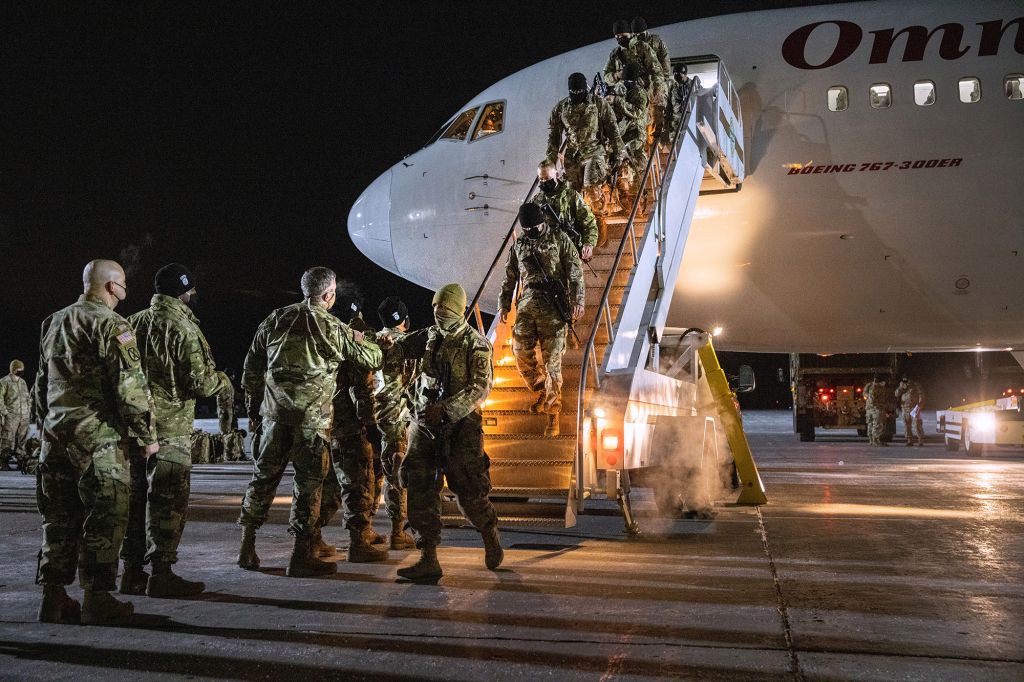
Earlier this month, the Afghanistan Study Group authored its findings on what the US should do in Afghanistan. Their recommendations can be summarized as: “Keep doing what you’re doing, only better.” But isn’t there something else we can do? The key insight comes from recognizing that Afghan society is somewhere between a chiefdom and a fiefdom. As such, it will take decades for it to become a nation-state. This insight has a cascade of implications. Some of the most salient are…
Stop calling this a war. This is a development project. Pull-out most American troops (though the timing needs to be flexible). Transfer ownership of the effort to the United Nations. While Americans will still be involved, they will be part of a UN contingent, and they will be mostly administrative. Also, if one nation has to take the lead, let it be a European nation, who is accustomed to long-term overseas commitments (born out of centuries of colonial rule).
Also, while Afghanistan doesn’t need a dictator, it needs a leader who can control the countryside. Introduce measures that strengthen central authority, even if it not entirely consistent with a republic-form of government (e.g., appointing relatives to senior cabinet posts, reintroducing the royal family in some role.) Also, the government’s strategy needs to emphasize the benefits of a central government to the outlying regions. Public works need to link them with the capital, and some form of social safety net would help. In the end, the government must be viewed as more beneficial than the Taliban. Also, be tolerant: rule-of-law has not taken hold deeply, so corruption, bribery, and other problems will persist for years. Just make sure progress is made.
This is not the first time an outside-the-box strategy has been proposed. In 2009, Rory Stewart, a British envoy who had lived in Afghanistan for three years gave a similar recommendation to the US Senate Foreign Relations Committee. Of course, it was rejected outright: it’s not the American way. That’s why it’s time for the UN to take-over.
Reference:
Afghanistan Study Group, “A Pathway for Peace in Afghanistan,” report, 3 Feb 2021; retrieved from https://www.usip.org/programs/afghanistan-study-group
Rebecca Kheel, “Biden faces familiar dilemma in Afghanistan,” The Hill, 7 Feb 2021; retrieved from https://thehill.com/policy/defense/537612-biden-faces-familiar-dilemma-in-afghanistan
Greg Jaffe, “How the US could have avoided failure in Afghanistan,” Washington Post, 22 Dec 2019, B4.
Gordon Lubolo and Nancy A Youssef, “Defense Secretary Austin to Review Trump’s Last-Minute Withdrawal of Troops from Afghanistan, Iraq,” Wall Street Journal, 26 Jan 2020, retrieved from https://www.wsj.com/articles/defense-secretary-austin-to-review-trumps-last-minute-withdrawal-of-troops-from-afghanistan-iraq-11611695378
“Rory Stewart”, Wikipedia, accessed 2 Feb 2021.
Photo: New York Post
One response
how about a U.S strategy where it doesn’t get involved in something that they have continually made worse for the last twenty years or more.