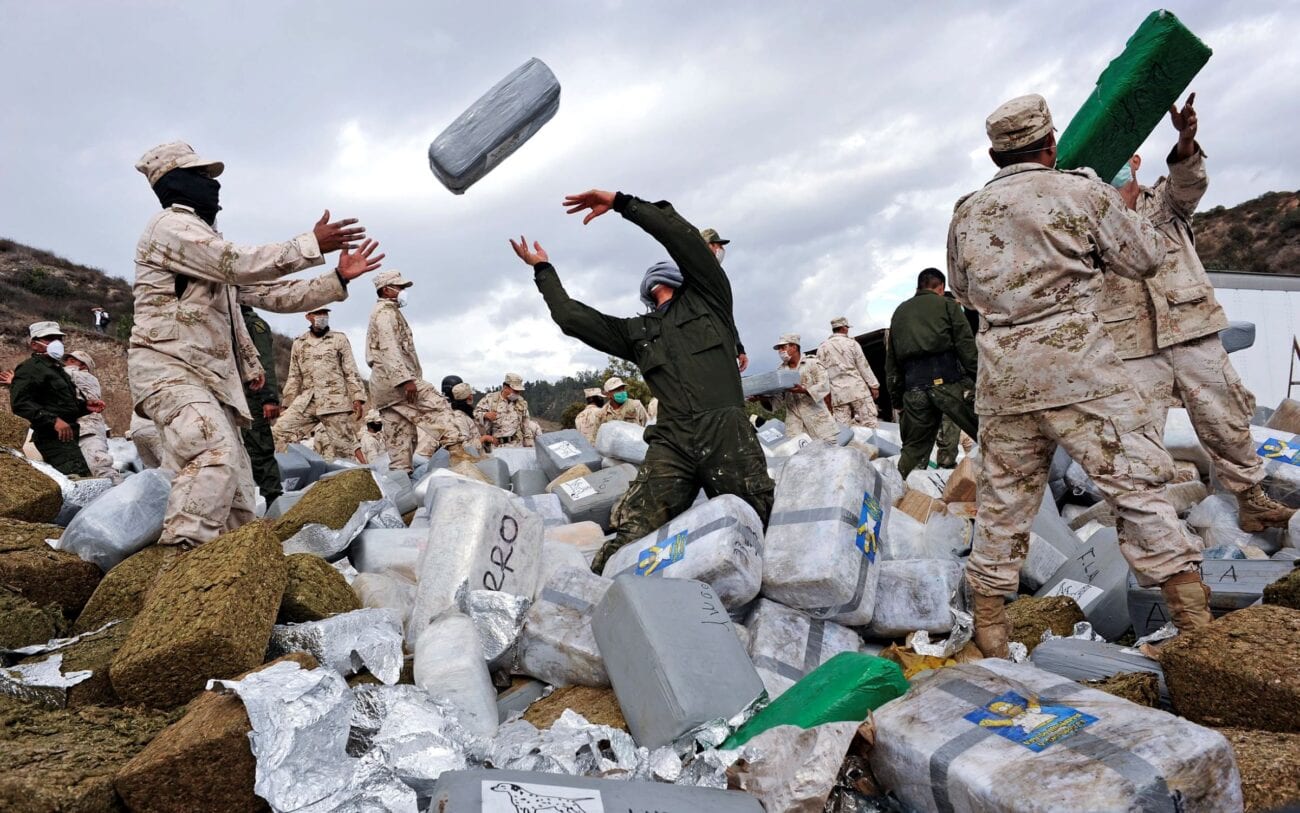
A couple of weeks ago, I ran an article on how Mexico is benefitting from a shift in supply chains from China, and how covid helped to accelerate this shift. While this should portend good things for Mexico, there is a huge problem: drug cartels.
Drug cartels control roughly 20% of the Mexican countryside. In 2014, 43 students went missing—it is believed they stumbled on a heroine-trafficking operation. In 2018, Mexico’s morgues ran out of space for victims of violence. The US Department of State has listed half of Mexican states on a travel advisory in the same classification as Afghanistan, Syria, and Iraq. Mexico’s murder rate is four times that of the United States, only 1% of its crimes are reported and solved, over 1.7 million people have left their homes to avoid crime, and the Mexican government recently revealed an astounding 79,000 people have gone “missing” over the last fifteen years—presumptively at the hands of drug cartels.
In theory, Mexico, a nation-state, should have no problem eradicating drug cartels, which operate on a chiefdom-level. However, this requires that Mexico have nation-state institutions that work and operate under rule-of-law. For seven decades, Mexico lived under one-party rule that held the cartels in check, siphoned money from them, and even refereed truces. Then in 2000, Mexico became a democracy. The ensuing administrations were never able to establish the state-level justice institutions needed to control them—local law-enforcement was too overwhelmed and federal law-enforcement was too far removed. Then last fall, Mexico’s former Chief of Public Security and its former Defense Secretary were arrested for colluding with the cartels—the corruption was higher and more grievous than thought.
Mexico cannot expect regionalism to continue if it cannot gain control of itself. It needs to develop the state-level institutions required to establish law-and-order—just as America had to do in late-19th and early-20th centuries. Mexico only spends about 1% of its GDP on justice systems—far lower than most industrialized countries. Perhaps diminished business prospects in the future will encourage politicians to make justice a higher priority.
Source:
Mary Beth Sheridan, “Searching for Mexico’s Disappeared,” Washington Post, 6 Dec 2020, A1.
Kevin Sieff, “Its Chief Jailed, Mexican City Still Bowed to his Will,” Washington Post, 15 Nov 2020, A1.
May Beth Sheridan, “Mexico’s Authority Erodes as Criminals Claim More Territory,” Washington Post, 1 Nov 2020, A1.
Kevin Sieff, “Cartels had Alleged Reach into Mexico’s Top Ranks,” Washington Post, 18 oct 2020, A21.
Photo: Getty Images
No responses yet