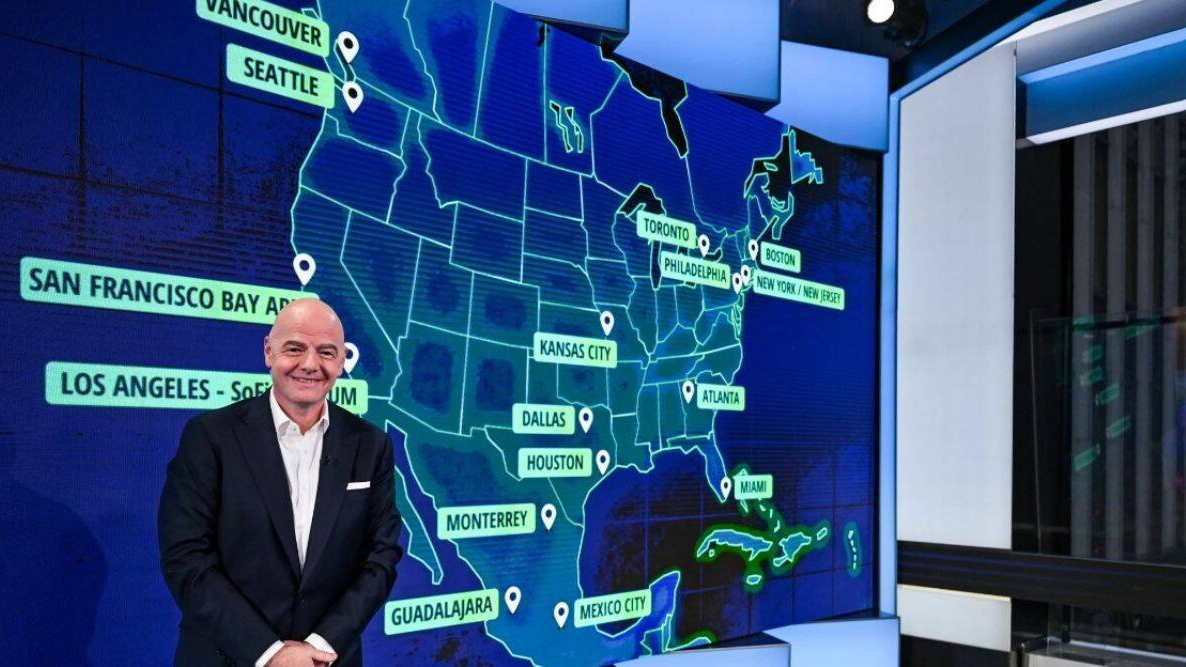
In June, FIFA, soccer’s international governing body, announced the host of the 2026 World Cup; however, this time it isn’t going to be a nation, but a region. The games will be spread across North America, with eleven sites in the US, three in Mexico, and two in Canada.
North America presented FIFA with The United Bid. The bid showcased the major financial opportunities for hosting the games in North America. Sites in the US include Seattle, San Francisco, Los Angeles, Kansas City, Dallas, Atlanta, Houston, Boston, Philadelphia, Miami, and New York. Sites in Mexico include Guadalajara, Monterrey, and Mexico City. The sites in Canada are Vancouver and Toronto. Each US stadium is used by an NFL or MLS team, while the Canadian sites host CFL or MLS teams, and the Mexican sites host teams from Liga MX, Mexico’s top soccer league. The Bid touted luxury suites and club spaces particularly suited for premium ticket buyers, international dignitaries, and FIFA leaders. To address the complexities of playing across countries, brackets progress from west to east, with all games from the quarterfinals on played in the US. The championship will be played at Met Life Stadium (formerly the Meadowlands) outside of New York City.
This is one of North America first opportunities to forge a collective identity. By hosting the world’s most popular game, it creates a brand that evokes power, elegance, and sophistication. It also positions North America as a cohesive working unit to the rest of the world by hosting the largest games ever—with 48 teams, up from 32 teams previously. Forging a North American identity is critical for the long-term future of the region, since only a cohesive union will have the mass to compete with China in the next century.
The US hosted the men’s cup previously in 1994, while Mexico hosted the games in 1986 and 1970, just two years after it hosted the Olympics in 1968. At that time, Mexico was branding itself as an up-and-coming country, and with great effect. Perhaps these games will have the same impact for North America as a region.
Source:
Laurel Wamsley, “The US Cities Hosting the 2026 World Cup are Announced,” NPR, 16 June 2022; accessed from https://www.npr.org/2022/06/16/1105562734/us-cities-hosting-2026-world-cup-announcement
Cesar Hernandez, “World Cup 2026 Hoar Cities Revealed, with 11 Venues in US, 3 in Mexico, and 2 in Canada,” ESPN, 16 June 2022, accessed from https://www.espn.com/soccer/fifa-world-cup/story/4686699/world-cup-2026-host-cities-revealedwith-11-venues-in-us3-in-mexico-and-2-in-canada
Photo: FIFA
No responses yet