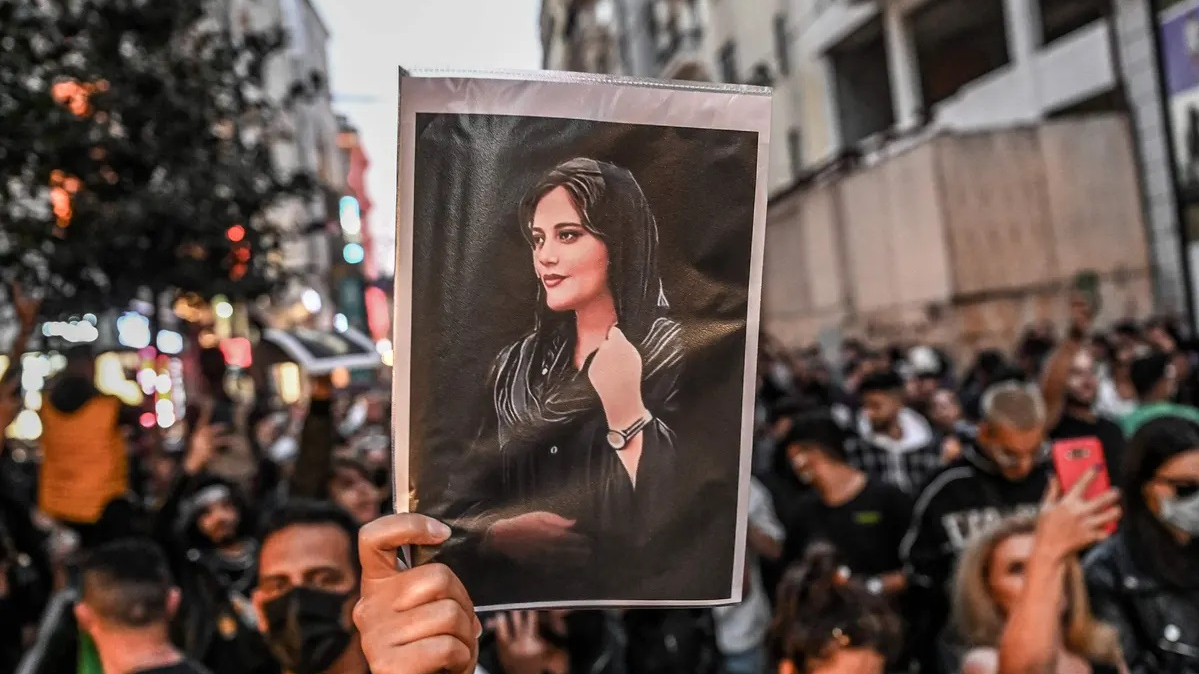
A 22-year-old Iranian women died in police custody on September 16. She had been arrested by the Guidance Patrol, Iran’s morality police, for not wearing her hijab properly. Her death set off a storm of protests across Iran, fomented by social media.
In September, Mahsa Amini was visiting her brother in Tehran. On September 13, she was arrested for not wearing her head scarf properly and wearing her pants too tightly. Two hours after she was arrested, she was taken to a hospital. Two days later, she died. Eyewitnesses say she had been beaten by police. Mahsa’s brother noticed bruises on her head and legs. The police claimed she died of a heart attack, but later, authorities claimed she died of a brain hemorrhage. A reporter at the hospital posted a photo of Mahsa’s grieving father. Within hours, protests broke out. Women marched down major streets without a hijab, and some cut their hair. Protestors called for justice and even the end of clerical rule. Photos went viral. Hashtag #Mahsa_Amini received 80 million retweets. A song, composed from tweets and posted on Twitter, became the anthem of the movement. Because Of put into words the anger and frustration of a generation. It racked-up 40 million views before its composer was arrested and forced to take it down. Police responded to the protests with tear gas, pepper spray, and in some cases, live rounds. The Iranian government began regional shutdowns of the Internet. Nationwide restrictions were placed on Instagram and WhatsApp. The reporter who broke the story was arrested.
Social media amplifies the emotions of a society. In this case, it helped galvanize the women and youth of a country to protest oppressive rules from a regime two generations older. Instability can lead to change. Whether this instability leads to positive change is anyone’s guess.
Human Rights Watch says over 300 people have been killed since the protests began. The supreme leader, Ayatollah Ali Khamenei, says the protests are orchestrated by agents of the West. Nonetheless, the songwriter, Shervin Hajipour, was released from prison, though he immediately renounced his song. Most people believe it was coerced.
Source:
Miriam Berger and Sanam Mahoozi, “How a Viral Song Became the Anthem of Iran’s Protests,” Washington Post, 9 October 2022, A25; see also https://www.washingtonpost.com/world/2022/10/04/iran-protests-song-shervin-hajipour-arrested/
“Death of Mahsa Amini,” Wikipedia, accessed 16 November 2022.
Photo: Ozan Köse/AFP/Getty Images
No responses yet