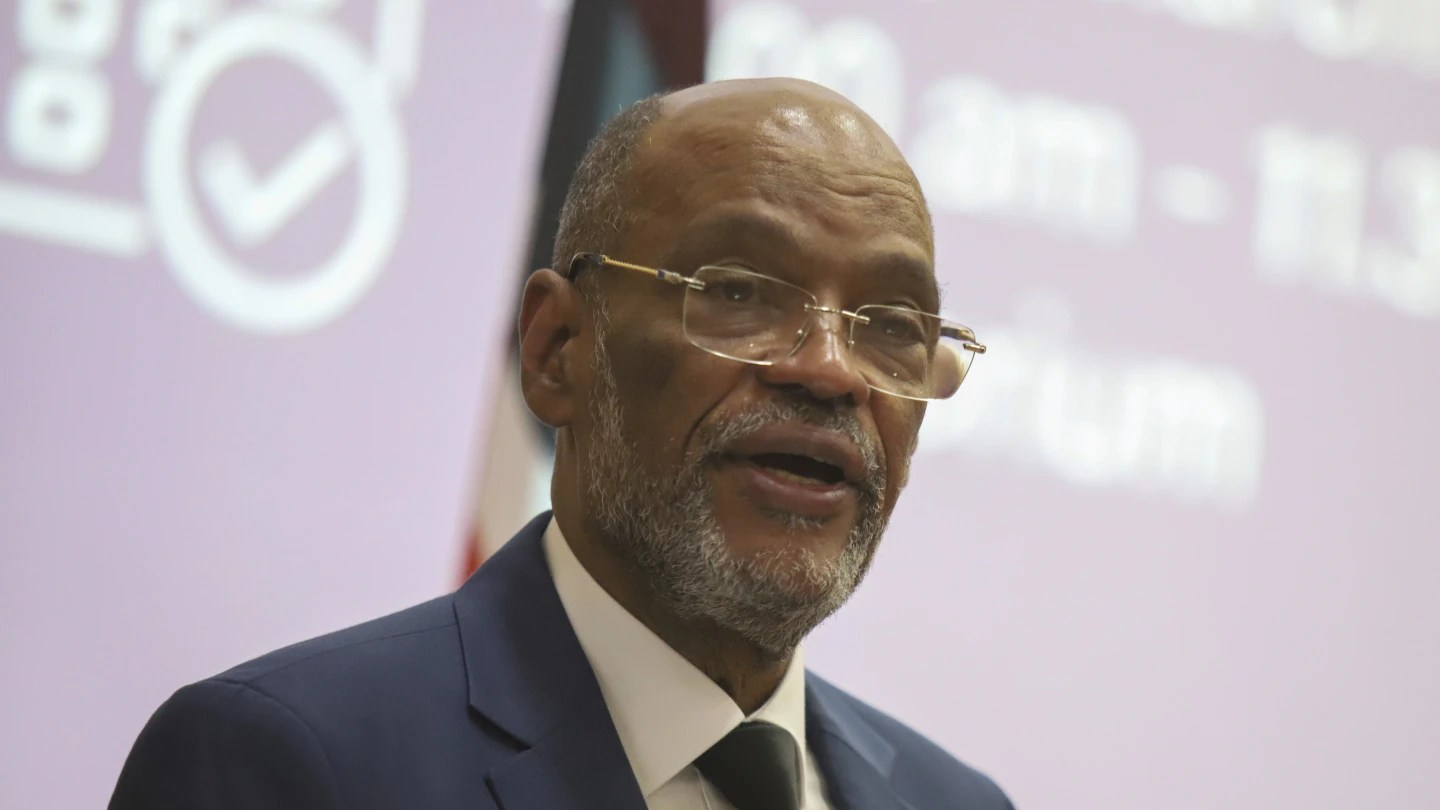
Haiti is collapsing. Gangs control much of the capital and have shut down the airport and seaport. They took advantage of the prime minister’s overseas trip to unleash a rampage. Now the prime minister has announced his intent to resign and gangs largely rule the country. This scenario was not predictable, it was predicted.
Haiti has reached a new low. Heavily armed gangs rule Port-au-Prince, killing indiscriminately and blocking aid. They closed the airport and seaport. They attacked police stations and a prison, freeing hundreds of gang members. One million Haitians are starving and hundreds-of-thousands are homeless. The downward spiral accelerated after the president, Jovenel Moise, was assassinated in 2021. Now there is no prime minister, no parliament (all members’ terms have expired), and few functioning institutions. Schools are closed, most businesses are shuttered, and most people stay in their homes.
This scenario, playing out before our eyes, is a fallback. It happens when a society drops to a lower societal level. In this case, Haiti has dropped two levels—from nation-state to chiefdom. Returning to a higher level usually involves violence as one leader rises above the others to assume control. After assuming control, he restores orders, allowing businesses to reopen since it is in his best interest to have a functioning economy so he can collect taxes. Restoring order, safety, and security, gives him legitimacy in the eyes of the people, which he’ll need for long-term rule. He’ll likely be corrupt by nation-state standards because that is how fiefdoms are run—through patronage and nepotism. However, such a society is preferable to chaos and death.
If the international community cannot bear to allow this process to playout, it needs to at least limit its involvement. Last week, CARICOM, the Caribbean Community, established a council of Haitian leaders to plan a path forward for the country. The council has already broken down. In reality, it had little chance of success because it held the mistaken idea that elections are the key to restoring order. This is a myth. Elections apply to nation-states, not fiefdoms and certainly not chiefdoms. A measured engagement to protect life, while allowing the grueling process to playout, would more likely create a lasting solution. That is unless another country wanted to invade and make Haiti its colony.
Source:
Widlore Merancourt, Amanda Coletta, John Hudson, “History Weighs on US Effort to ‘Fix’ Haiti, Washington Post, 17 March 2024, A1; see also https://www.washingtonpost.com/world/2024/03/16/haiti-intervention-united-states/
Jean Daniel, Ines Bel Aiba, “Haiti Transition Council Stalls as Capital Sees Relative Calm,” AFP via Yahoo News, 26 March 2024
Photo: Andrew Kasuku, AP
No responses yet